
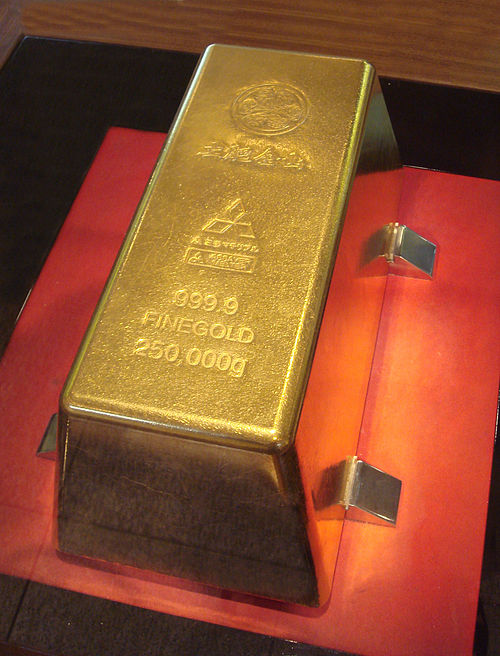
As a safe and effective investment option, many news articles are currently encouraging people to invest in gold or silver.
Since tax law applies to all economic transactions, these investments are obviously subject to taxation by the French government. To help you make these investments with full knowledge of the facts, our firm outlines a few key rules you should be aware of[1]:
With regard to precious metals (gold, silver, platinum, etc.) and, more broadly, jewelry, works of art, collectibles, and antiques, French law provides for two methods of taxation for an individual who sells or exports these goods:
- The Flat-Rate Tax on Precious Metals and Objects(Automatic Application) (1)
- The option to apply the general tax regime for capital gains on movable property, based on Articles 150 UA and 150 VC of the General Tax Code (“CGI”) (2)
The 30% flat tax, which applies to investment income and the sale of securities and equity interests, therefore does not apply to these sales.
The Flat-Rate Tax on Precious Metals (Basic System)
- Affected Operations
In principle, the following are subject to the flat-rate tax (excluding professionals):
- Sales for consideration of:
-
- precious metals (gold, silver, platinum, gold and silver coins minted after 1800, etc.);
- jewelry, works of art, collectibles, or antiques.
- Permanent exports of these same goods outside the European Union.
These provisions took effect following the enactment of Law No. 2005-1720 of December 30, 2005, as amended by the 2014 and 2018 Finance Acts, the provisions are now codified in Articles 150 VI through 150 VM of the General Tax Code (CGI).
- Tax Rate
The tax has two rates, depending on the type of property:
|
Property Category |
Flat-Rate Tax Rate | CRDS | Effective rate for a resident |
|
Precious Metals |
11 % |
+0,5% |
11,5 % |
| Jewelry, works of art, collectibles, antiques | 6 % | +0,5% |
6,5 % |
The rates of 11% (precious metals) and 6% (jewelry and similar items) apply to sales and exports made on or after January 1, 2018.
The 0.5% CRDS applies to all transactions subject to the flat-rate tax.
Warning:
The tax is calculated
- On the sale price (sale in France or within the EU);
- On the customs value (exports outside the EU).
- Who pays and who files?
The party liable for payment is the seller or the exporter.
The payment is made:
-
- through an intermediary with tax residency in France (antique dealer, auctioneer, specialized company, etc.), who acts in the name and on behalf of the seller or the buyer, or purchases the item for immediate resale (“transparent” or “opaque” intermediary);
- in the absence of an intermediary, by the purchaser subject to VAT and established in France;
- in other cases, by the seller or exporter themselves.
In practice:
- The intermediary or the VAT-registered purchaser reports the tax using Form 3310 A-SD, which is attached to the VAT return (CA3/CA12), or Form 2091 within the month of the sale or export;
- Sellers who do not use an intermediary also use Form No. 2091.
If the capital gains tax regime is elected, the intermediary or the taxable purchaser is released from all liability, as the flat-rate tax is no longer due.
- Specific Exemptions
Several exemptions are provided for, primarily in Article 150 VJ of the General Tax Code (CGI):
- Nonresidents:
-
- Sales of precious metals, jewelry, works of art, collectibles, or antiques made in France by individuals who are not tax residents of France are exempt, provided they can prove their non-resident status.
- For exports of precious metals by nonresidents, the exemption is subject to proof of:
- nonresident status;
- and a prior import, introduction, or acquisition in France, or an inheritance or gift received from a person residing in France or in the EU.
- Sales to museums, libraries, and public archives:
Transfers to a “Musée de France” (Art. L. 441-1 of the Heritage Code), a museum operated by a local government, the BnF, another library, or public archives are exempt.
- Small-value sales (goods, excluding raw metals):
Sales or exports of goods listed in Article 150 VI, Section I, Item 2 (jewelry, works of art, collectibles, and antiques) with a price not exceeding €5,000 are exempt.
Nonresidents who are exempt from the flat-rate tax are also exempt from the CRDS.
- Penalties for Failure to File a Report
In the event of a failure to file a tax return or an underreporting of taxes, penalties can quickly become severe:
- A tax penalty equal to 25 percent of the amount of taxes evaded is imposed (Art. 1761, 2° of the CGI);
- Late-payment interest at the statutory rate (Art. 1727 of the General Tax Code) and, depending on the circumstances, surcharges—particularly for failure to file a tax return—may also be applied.
Option to Elect the General Tax Regime for Capital Gains on Personal Property
- Principle
A seller or exporter who is an individual domiciled in France may, when the transaction falls within the scope of the flat-rate tax, opt for the general tax regime for capital gains on movable property (pursuant to Art. 150 UA of the General Tax Code), in lieu of the flat-rate tax. This election is irrevocable for the transaction in question.
This option is available provided that the taxpayer can provide conclusive proof of the date and purchase price of the property or demonstrate that the property has been held for more than 22 years (the period required to qualify for a full capital gains tax exemption).
In the absence of such justification, the flat-rate tax remains in effect by operation of law.
- Calculation of Capital Gains
For property covered by Article 150 UA (including precious metals and objects if the option is exercised), the capital gain is equal to:
Sale Price
–
(purchase price + actual acquisition costs + nonrecurring restoration/refurbishment costs).
A 5% reduction per year of ownership beyond the second year applies to the gross capital gain, so that the capital gain is fully exempt after 22 years of ownership.
Thus, this system is similar to the one applicable to capital gains on real estate.
- Tax Rates
If you elect the capital gains tax regime:
- The net capital gain (after the holding period deduction) is taxed at 36.20%, broken down as follows:
- 19% in income tax;
- 17.2% for social security contributions.
Capital losses are not taken into account for personal property as defined in Article 150 UA.
- Practical Benefits of the Option
This option is generally a good choice:
- if the property has been owned for more than 22 years:
-
- the capital gain is then fully exempt (with a 5% deduction per year after the second year);
- Otherwise, the flat-rate tax (11.5% or 6.5%, depending on the property) would be due.
- For property received through a recent inheritance (less than 2 years ago) and subsequently sold at auction:
- The acquisition cost used for capital gains is the same as that used for inheritance tax purposes (CGI Art. 764);
- In most cases, the sale price equals the estate value, so there is no capital gain.
- Course Selection Procedures and Registration
The option is exercised by the seller or exporter using Form No. 2092 (CERFA No. 10251).
This statement outlines the basis for calculating the capital gain and formalizes the option provided for in Article 150 VL of the General Tax Code.
The filing must be made within one month of the sale (or at the time of customs clearance for exports).
When the option is exercised:
- The flat-rate tax is not due (CGI, Art. 150 VL);
- A VAT-registered intermediary or purchaser is completely exempt from liability for the flat-rate tax (General Tax Code, Annex II, Art. 74 S quinquies).
- Distinction between “precious metals,” “jewelry and similar items,” and “collectibles”
This distinction is very important because it affects the flat-rate tax rate (11% vs. 6%) and, in some cases, the tax base category (precious metals vs. jewelry/objects).
Precious metals:
- However,
- money,
- turntable
- their raw alloys;
- Gold and silver coins minted after 1800: considered “precious metals” within the meaning of Article 150 of the VK.
Jewelry and similar items:
- Fine or cultured pearls, unmounted;
- Unmounted and unset diamonds and gemstones (excluding those for industrial use);
- Unmounted synthetic or reconstituted stones (excluding those for industrial use);
- Articles made of precious stones, synthetic stones, or pearls, etc.;
- Jewelry and parts thereof, of precious metals or plated or lined with precious metals;
- Precious metal jewelry and tableware;
- Fashion jewelry;
- Wristwatches, pocket watches, watch bands made of precious metals, and other articles made of precious metals.
The Council of State has clarified that, for the purpose of the tax on precious objects and metals, the term “jewelry” refers to crafted objects—valuable either because of the materials used or the craftsmanship involved—intended to be worn as adornments, even when they are not made of precious metals.
Crafted gold and silver objects are classified as jewelry, by analogy, and not in the “precious metals” category, with the exception of coins.
Collectibles:
Whether an item qualifies as a “collector’s item” is a question of fact, determined on a case-by-case basis by the administration and the court.
It depends, in particular, on:
- length of service;
- rarity;
- at a price significantly higher than that of a similar item of everyday use;
- the discontinuation of production;
- of origin or destination;
- of historical significance;
- because the object belonged to a famous person.
Examples: stamps; zoological, mineralogical, and numismatic collections; gold and silver coins dating from before 1800; and classic cars as defined by customs regulations.
Capital gains on the sale of personal property, excluding precious metals
Apart from the specific flat-rate tax on metals and precious objects, the general rules governing capital gains on personal property (General Tax Code, Art. 150 UA et seq.) apply to other types of personal property, such as:
- Recreational boats,
- Wines and spirits received in payment of rent,
- Racehorses, sport horses, etc.
For these properties:
- Exemption if sale price ≤ €5,000 (except for precious metals);
- The calculation of capital gains and the holding period deduction are the same as those described above;
- Tax rate of 19% + 17.2% in social security contributions (36.2%).
***
In summary, for an individual who holds precious metals as part of their private assets:
- Sale or export of precious metals (gold, silver, platinum, coins minted after 1800, etc.)
11.50% of the sale price or customs value
Or
36.20% on realized capital gains from sales, if elected
(with an exemption for those over 22)
- Nonresidents Are Generally Exempt
- Assets received through inheritance or held for a long time: it is often preferable to opt for the capital gains tax regime
- Tax audits and potentially severe penalties.
*
[1] It is hereby clarified that the purpose of this article is to present technical rules, without expressing any political opinion or personal view.